MagZine.nu — A Decade Powering Europe's Digital Magazine Kiosk
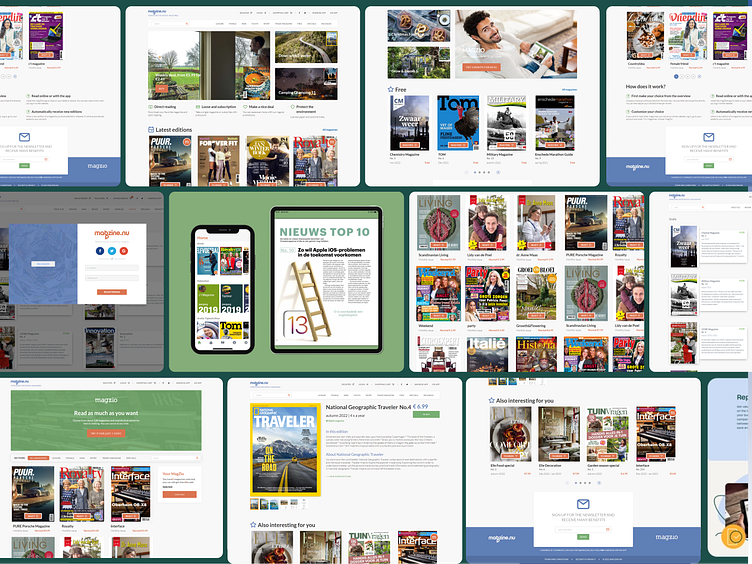
Starting in 2012, TBox became the engineering backbone of MagZine.nu — the Netherlands' first and largest independent digital magazine kiosk. What began as a single iPad app grew into a multi-platform product suite spanning 400+ titles, a white-label publishing platform, and a subscription service — all built and maintained by TBox over ten years.


The brief
Building the future of Dutch publishing — before anyone else did
The iPad launched in 2010. Wob ten Hoeve had been thinking about this moment since a Dutch publishers' congress in 2009. He saw it clearly: physical magazine distribution was entering a slow decline, and the publishers who moved first to digital would own the transition. MagZine.nu was his bet — the Netherlands' first independent digital magazine kiosk, positioned to serve publishers and readers equally.
By 2012, the platform needed to grow beyond its first-generation app. The kiosk had early traction and a compelling vision, but the technical foundation needed to be rebuilt for scale — cleaner architecture, richer features, and a platform capable of evolving as publishing itself evolved. That's when TBox came in.
The partnership
TBox became MagZine.nu's engineering partner in 2012 and stayed for over a decade. Not as a vendor who handed over code. As the team that owned the build, understood the product deeply, and evolved it through multiple major versions, a white-label product line, and a subscription service — all while the platform served hundreds of thousands of Dutch readers.
Product 01 — Main platform
MagZine.nu: The Digital Kiosk
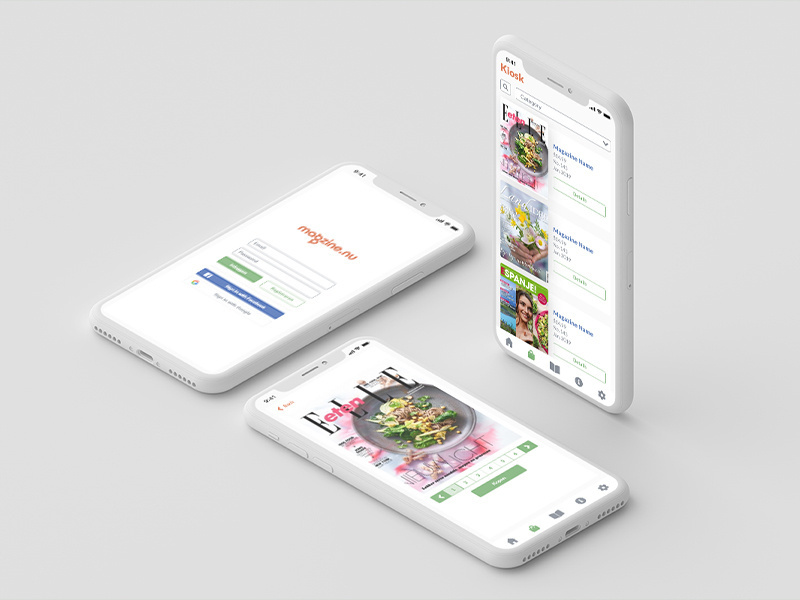
The main MagZine.nu app was the flagship. TBox built it from the ground up for iPad, then extended it to iPhone and Android — making it one of the earliest fully multi-platform magazine experiences in the Netherlands. At peak, the app served over 400 Dutch-language titles and recorded 500,000+ annual downloads.
This wasn't a simple reader app. It was a full-featured magazine commerce platform — with online/offline download management, secure subscription flows, in-app purchase integrations, push notifications, and a reading experience polished to the standards of a consumer product that needed to compete with apps from major European publishers.
Product in motion
See MagZine.nu in action
A look at the MagZine app — the kiosk, the reading experience, and the subscription flow that made it the leading digital magazine platform in the Netherlands.
Product 02 — White-label platform
AppVilla: One Engine, Many Brands
As MagZine.nu grew, publishers didn't just want to be listed in the kiosk — they wanted their own branded app. A standalone product, carrying their masthead, published under their own App Store account. Wob ten Hoeve saw the opportunity: build a white-label product that could be instantly rebranded and deployed for any publisher, without duplicating engineering effort.
TBox built that product. The AppVilla platform was a configurable, white-labelled mobile application — one underlying codebase that could be dressed as any publisher's branded magazine app. Each deployment had its own in-app purchases, its own subscription products, its own backend API connections, and its own visual identity.
A single, parameterised codebase driven by a publisher configuration layer. Swap the brand colours, logo, app name, App Store credentials, and backend API endpoints — and a fully branded standalone app was ready to publish. Each publisher's app appeared in the App Store under the publisher's own developer account and brand, with no visible connection to MagZine.
This architecture let TBox onboard new publishers rapidly, maintain a single codebase across all deployments, and ship feature updates to every publisher app simultaneously — while each publisher experienced their product as custom-built.
Technical depth
The PDF engine: open source, deeply extended
Magazine reading on mobile is a demanding problem. A single issue can be a 50MB+ PDF with high-resolution images, complex layouts, and embedded links. The commercially licensed PDF frameworks used in the main MagZine app added cost at every deployment — a problem at white-label scale where each publisher app needed the same capability.
For AppVilla, TBox chose an open-source PDF library as the foundation — then invested significant engineering time building it into a production-grade reading engine. The result was a lighter, more cost-effective foundation with custom capabilities that matched and in some areas exceeded the commercial alternatives.
Product 03 — Subscription service
MagZio: The Spotify for Dutch Magazines
In 2015, Spotify had proven that streaming subscription models could transform media consumption. Wob ten Hoeve applied the same logic to magazines: a flat monthly fee for unlimited reading across a curated catalogue. TBox built MagZio into the MagZine app as a subscription layer — €9.95 per month, 75+ titles, unlimited swapping.
The model was technically complex: a reading-time tracking engine that monitored minutes spent per publication and used that data to proportionally distribute subscription revenue to publishers — using cover price as a reference weighting. This publisher revenue engine was entirely custom, built by TBox.
What TBox delivered
Ten years of engineering, front to back
- Built the MagZine.nu iPad app from scratch in 2012 — native iOS, clean API-first architecture, professional-grade magazine reading experience at a time when most iPad apps were primitive by comparison.
- Shipped the iPhone and Android versions of the main app — expanding MagZine.nu's reach from tablet-only to every major mobile platform.
- Designed and implemented the offline PDF download system — full issue downloads managed at the app level, readable without any network connection.
- Integrated in-app purchase flows (App Store + Google Play) and annual subscription models, plus external payment flows via iDEAL, PayPal, and credit card.
- Implemented push notification infrastructure for new issue alerts, subscription renewals, and editorial promotions.
- Built the AppVilla white-label platform — a single configurable codebase that deployed as individually branded, publisher-specific apps across the App Store and Google Play.
- Extended an open-source PDF library into a production-grade reading engine with full-text search, highlights, annotations, embedded URLs, images, maps, and video — alongside ePub support.
- Built the MagZio subscription layer and the publisher revenue distribution engine — tracking reading time per magazine and computing proportional payouts.
- Maintained, optimised, and evolved the platform continuously across a decade — handling App Store policy changes, new iOS/Android API requirements, and evolving publisher needs.
What this partnership represents
At the time MagZine.nu was being built, iPad apps with this level of polish were genuinely rare in Europe. The digital magazine market was contested by global platforms — Zinio, Newsstand, Blendle — and most publishers outsourced their digital products to whoever was cheapest. MagZine.nu chose depth over convenience. TBox was there for every version of that choice, for ten years, across three products, on four platforms.
What this demonstrates
Engineering trust earns a decade, not a contract
Short engagements are easy to win. Long ones have to be earned, repeatedly, every year. The MagZine.nu partnership lasted over ten years not because of a contract, but because TBox consistently delivered at the standard the product required.
That meant rebuilding the architecture when the original didn't scale. It meant building a PDF engine from scratch because the licensed alternative cost too much at white-label volumes. It meant tracking reading time per magazine and computing revenue splits that publishers trusted enough to base their business on. And it meant staying current — through every iOS major release, every App Store policy change, every shift in the Dutch digital publishing landscape.
MagZine.nu didn't stay the largest independent digital kiosk in the Netherlands by accident. It stayed there because the engineering underneath it was built to last.
Ready to build something that lasts?
We don't do short engagements for the sake of it. The best work — the kind that earns a decade of trust — starts with an honest conversation about what you're actually building.
Start a conversation →